Showing posts with label French army. Show all posts

Sunday, July 27, 2025

Blenheim, Order of Battle, Part V, l’Armée du Rhin


The final part of the Order of Battle is the Marshall Tallard “Army of the Rhine”. This army, formed in early 1704 to support Marsin and Max Emmanuel in Bavaria. contained an noticeable proportion of recruits as well as some Vieux-Regiment and the Gendarmerie. The passage of Black Forest to reach the other French Army was well executed by Tallard. However, at the time of Blenheim, the cavalry was plagued by Glanders, an horse pulmonary disease. Accordingly Tallard’s cavalry was dangerously understrenght, with a full dragoon brigade dismounted by lack of horses.


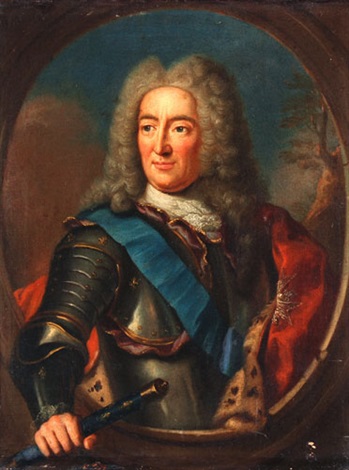
The Marshall Tallard, captured during the battle and liberated in 1711: his performance at Blenheim was under his previous standards.

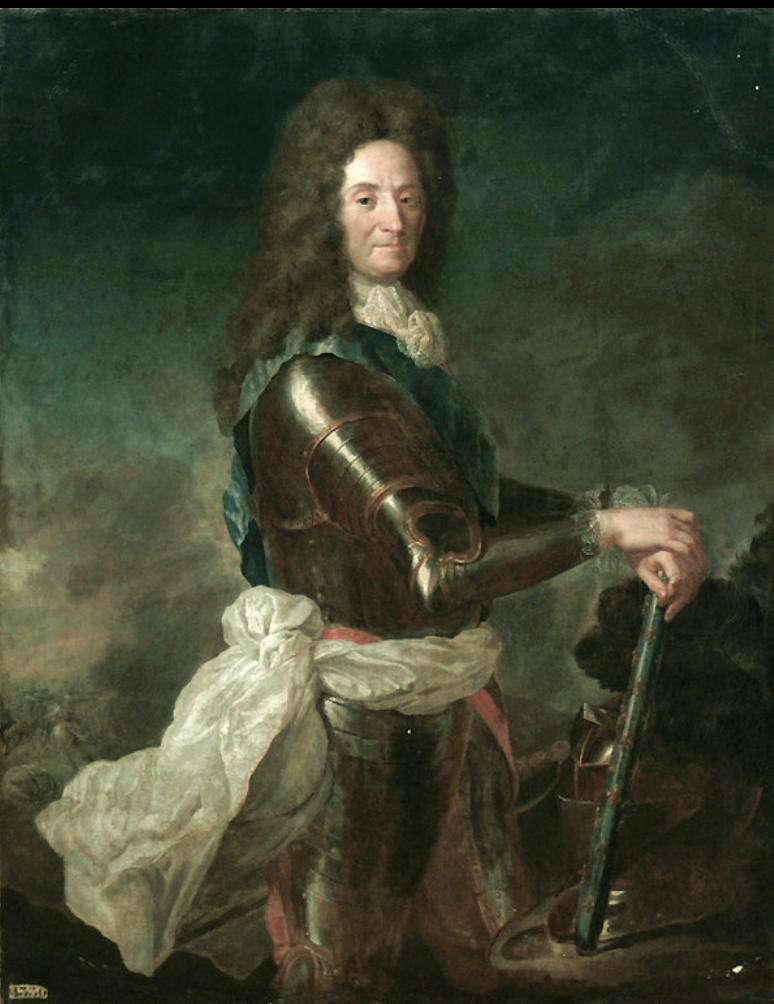


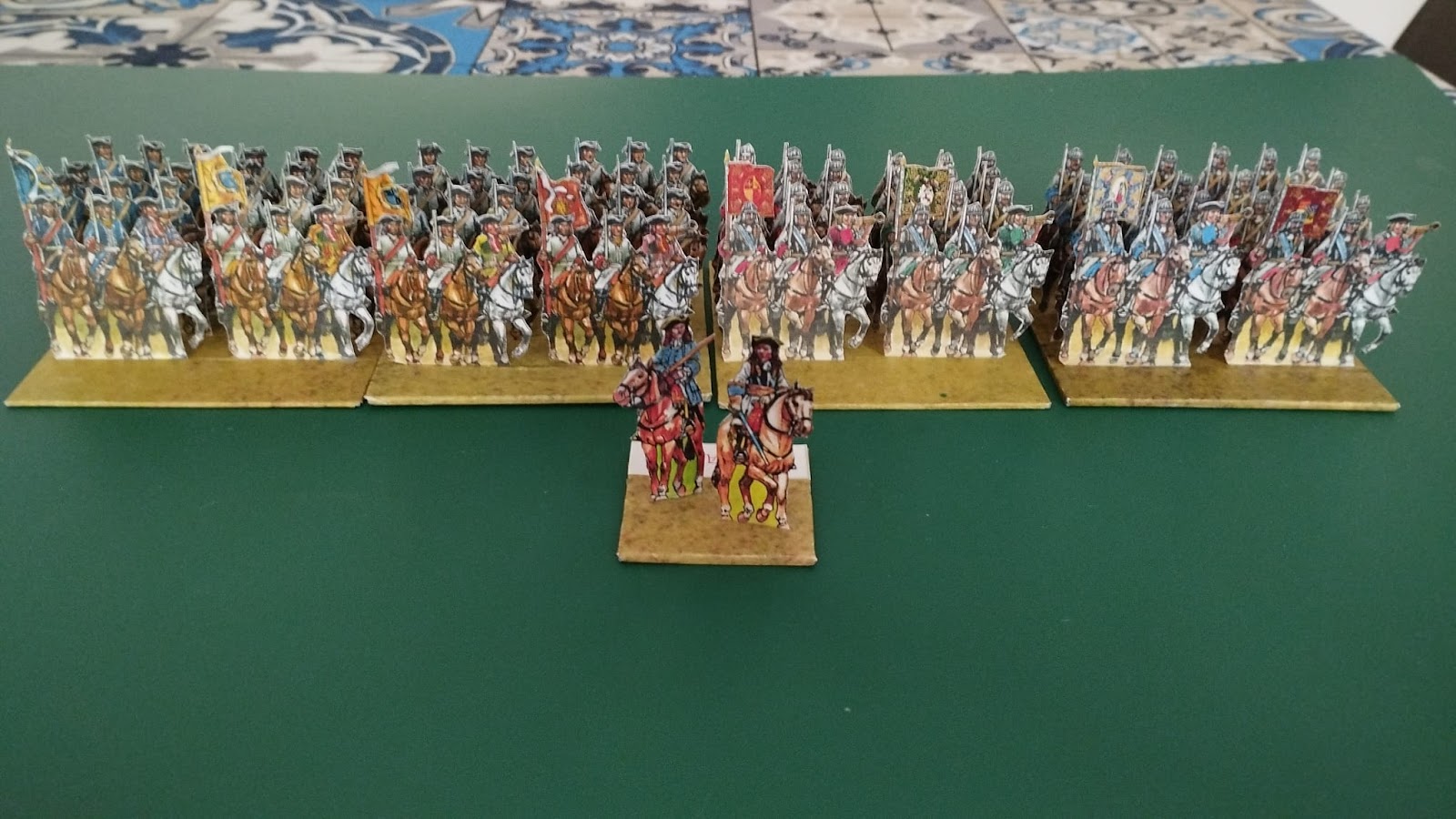
The main body was commanded by the Lt. Gen. Marquis de Montpeyroux: the left cavalry division, under the Duc d’Humieres was formed by the brigade Merode/Silly (left), represented by the two Spanish regiments Acosta and Gaetano and the brigade La Valliere (regt. Orleans and Bourgogne); the right wing cavalry, under Lt. Gen. Comte de Zurlauben: it comprises the Vertilly brigade (Gendarmerie) on the left and the brigade Broglie/Grinan (regt. Du Roi and La Baume) on the right.


This is a bust of Béat-Jacques de La Tour-Châtillon, Comte de Zurlauben, a veteran and competet Swiss officier that was killed at the battle.


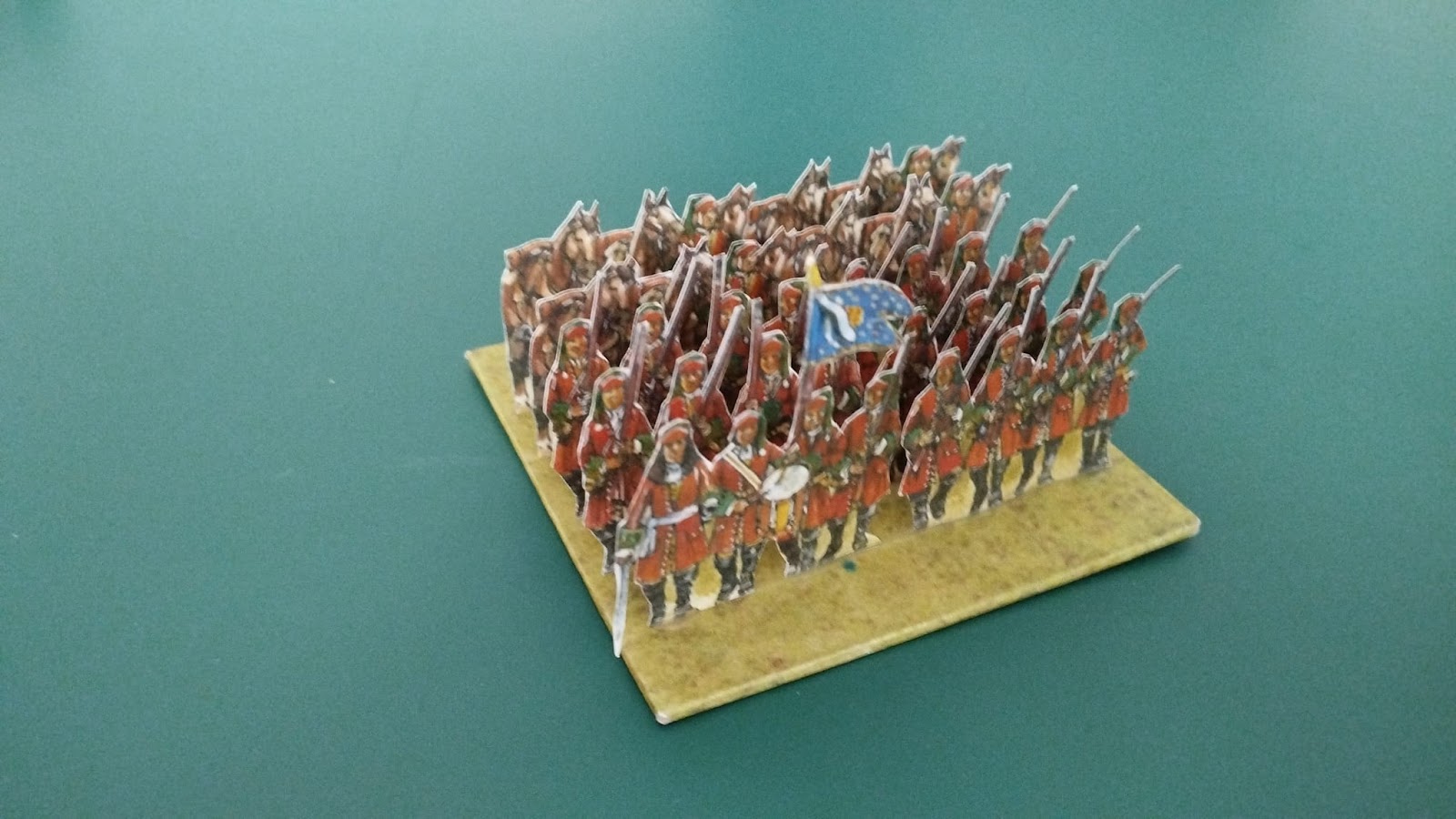
The left wing infantry, that in the battle was on the third line between Blenheim and Oberglau, was commanded by the Marquis de Saint-Pierre. It was composed mainly by fresh recruits which, however, performed heroically being cut to pieces by the Allied cavalry. From left to right: brigade Trecesson (regt. Albaret), brigade Breuil (regt. Auxerrois), brigade Belleisle (regt. Nice) and a light battery. D’Albaret was raised in 1702 and destroyed at Blenheim, his colonel killed and hence disbanded in 1704; Nice was instead a Piedmontese regiment.
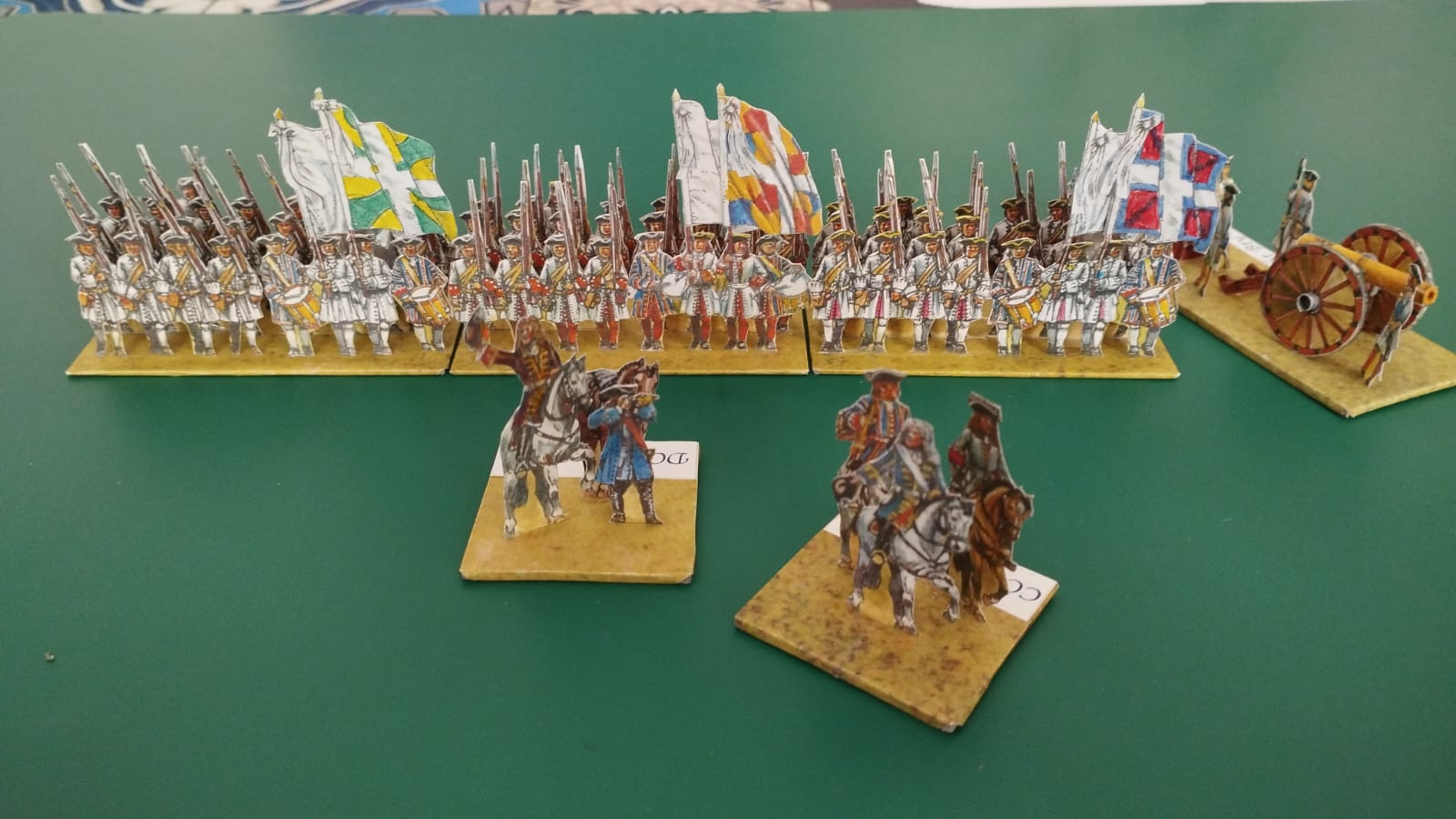


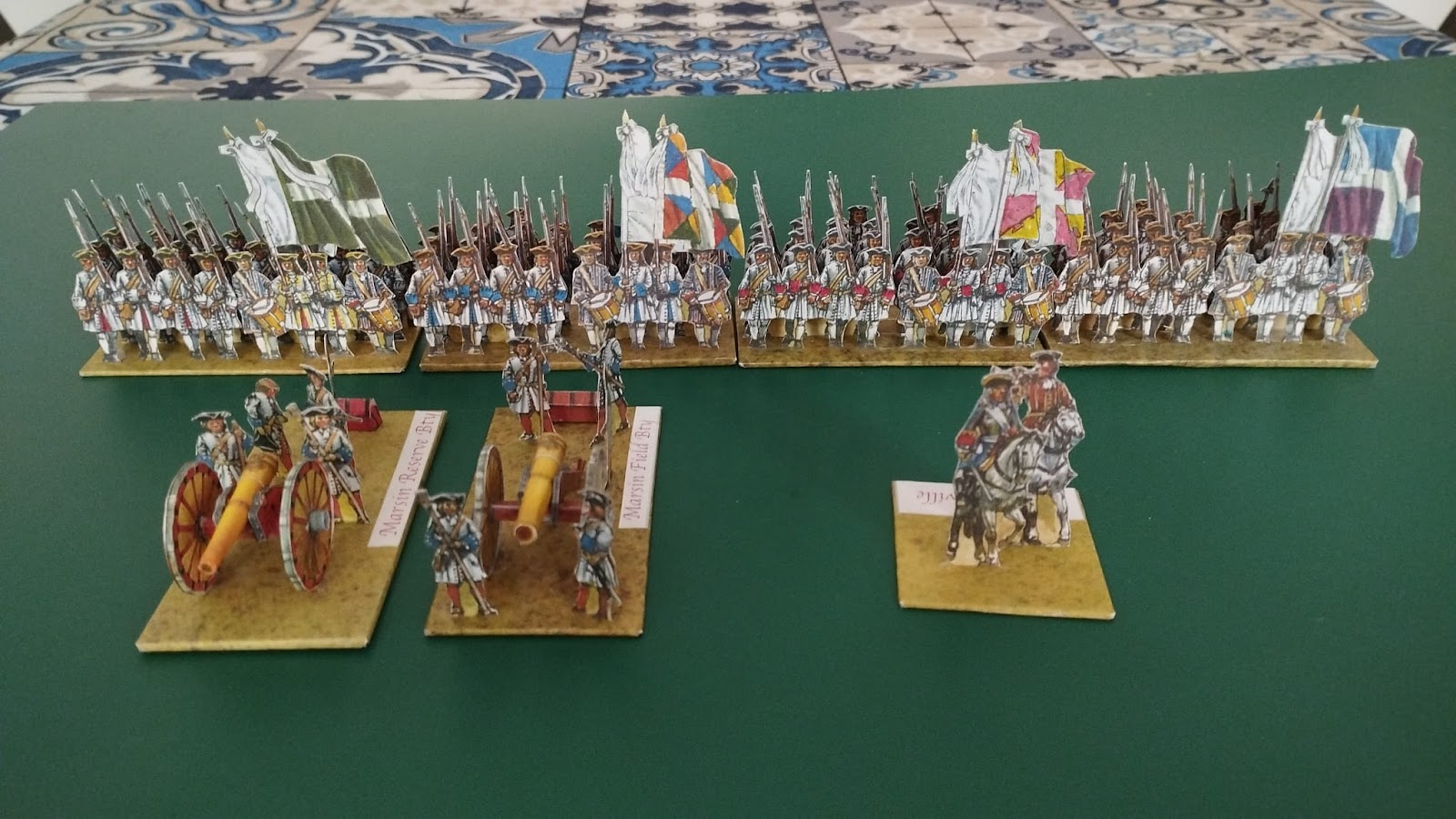
The right wing infantry was the main Tallard infantry reserve which was swallowed uselessly into Blenheim by Cleràmbault: it was at the orders of Lt. Gen. Marquis de Marinvaux. In the first lime the brigade D’Enonville (regts. Royal and Boulonnais); in the second line brigade Montroux (regt. Montroux) and Monfort (regt. Blasois) plus two light and an heavy artillery batteries. The red-coated Montroux was a Italian regiment.
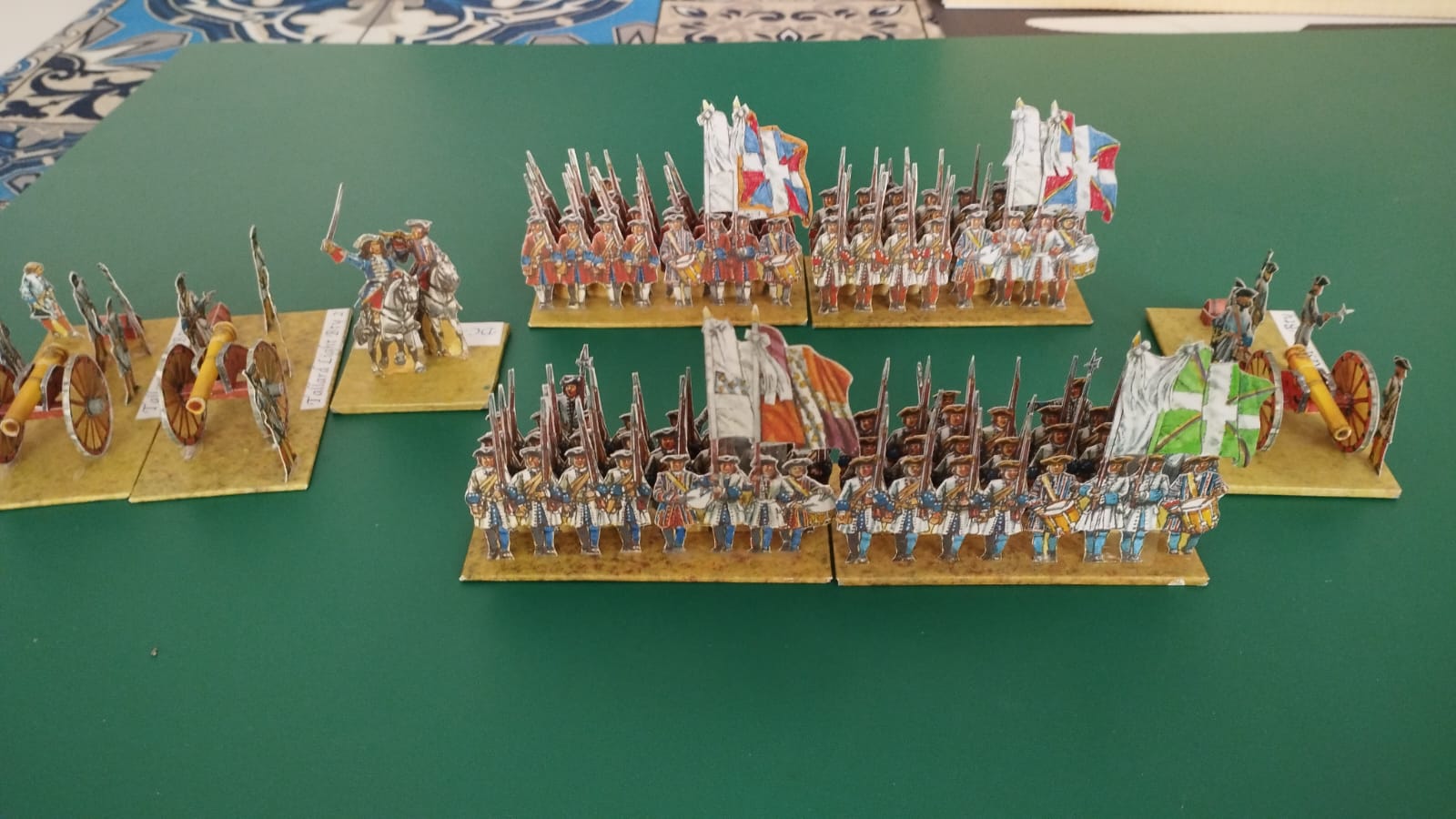


The Blindheim garrison under Maestre-de-Camp de Blansac: from the left (behind entrenchments) brigade Hautefeille of dismounted dragoons (regt. Rohan-Chabot), in the town the brigades de Maulevrier (regt. Navarre) and Greder (regt. Greder Allemand). Blenheim is represented by a double-based town and hence can be occupied by four brigades.


The main Blenheim reserve was commanded directly by Philippe de Paullau, Marquis de Cleràmbault, the son of a same name French Marshall. I was not able to find on the web a portrait or anything else regarding his career, as his memory was put under a cloud after the disaster. He died in the Danube trying to escape or to find an escape route for his soldiers, who knows. Indeed he was a capable subordinate that performed well enough as Tallard’s subordinate and the Marshall entrusted him correctly for the important task of defending the Blindheim strongpoint. What happened in his mind remains a mystery: maybe he had a nervous breakdown or maybe the ferocity of Allied infantry at the Schellenberg created an excessive fear of the Cutts’ attack column. However, he was the sole responsible of putting 27 battalions in the town and was an easy scapegoat for the whole disaster.


From left to right, as usual, brigade Balincourt (regt. Artois), brigade D’Argelos (regt. Santerre and regt. Languedoc), brigade Saint-Segonde (regt. Zurlauben) supported by a light and a field batteries. Zurlauben was a Wallon regiment, annihilated at Blenheim and never reformed, its Colonel Comte de Zurlauben being killed at the battle.


Saturday, July 19, 2025

Blenheim, Order of Battle. Part IV, l'Armée du Germanie


The roster for the Armèe du Germanie, under the joint command of the Marechàl Ferdinand, Comte de Marsin and the Elector of Bavaria, Maximilian Emmanuel II.


The Elector of Bavaria (left) and the Marechàl (right): both were good soldiers, the Marechàl being killed at the battle of Turin in 1706.


The left wing Infantry was under the command of the Lt. Gen. Marquis de Rosel: from left to right, first line brigades Buzancois (regt. La Reine), Clare (Irish regt. Clare) and Coetquen  (regt. Coetquen). In the second line the brigade Isenghien (regt, Poitou and Isenghien) and two light batteries.


The right wing infantry, commanded by the Lt. Gen. Marquis de Blainville, killed in the battle (he was the son of the famous Minister Colbèrt)


Brigade Bligny (regt. Champagne and Saintonge) and Nangis (regt. Agenois and Bourbonnais), together with a field and an heavy battery.


Left wing cavalry, Feld-Marschall Graf Arco (here in a studio armour, in his early years)


brigade Montmain/Vigiers (regt. Royal Piemònt and Condè), Barentin/Vivans (regt. Barentin and Vivans) and the Bavarian brigades Von Weickel (cuirassier regt. Weickel and Wolframsdorff) and Wolframsdorff (Cuirassier regt. Arco and Costa):


The right wing cavalry, linking the right of the Army with the left of Tallard’s was under the command of Lt. Gen. Bourg (later French Marshall under the Regency);


brigade D’Anlezy (regt. Royal and Hedicourt) and Prince Charles de Lorraine/Massenbach (regt. Prince Charles de Lorraine and Choiseul):


The town of Lutzingen was garrisoned by the Bavarian infantry commanded by the Maj. Gen. Marchese Alessandro Maffei, from Bologna:


Brigade Maffei (regt. Maffei and Leibgarde Grenadier) and brigade Mercy (regt. Mercy and Tattenbach) supported by a Bavarian field battery. Lutzingen is represented by a Town base, with space for two units. Its buildings came from Peter Dennis "European Buildings" Helion Papersoldier book:


On the far left of Lutzingen there was the division of Lt. Gen. Marquis de Sauffrey: from left to right brigade Montmorency (regt. Vermandois and Béarn), brigade Motbron (regt. Dauphin and Condé ) and Tourovre (regt. Toulouse) supported by a light battery:


At the very far left of there was the cavalry division of Lt. Gen. Comte de Dreux: brigade Conflans (regt. Conflans and Rouvray) and the dragoons brigade Fontbeausard (dragoons regt. La Vrilliére and Listenois).


The dragoons brigade Fontbeausard dismounted:


Friday, October 17, 2014

Reichsarmee completed!


Yes, it was a 2013 goal…. the last batch of Imperials is finally completed! Now I have all the unit of the Reichsarmee (minus the elusive Sachsen-Gotha dragoons, 200 horses, so well below the Volley and Bayonet scale).


Going into detail we have:


the Pfalz-Zweibrucken regiment (33 distinct contingents), rated “poor” by Soubise. An uneventful career, probably present at Korbitz, 1759.


The Nassau-Weilburg regiment, from the Upper Renish District as the previous: 9 contingents, first battalion captured by Wunsch at the surrender of Leipzig, most of the rank and file preferring the Prussian service to captivity.  The remaining battalion took part in 1761 campaign in Saxony. The flags are completely speculative:


The Ernestine-Sachsen regiment. A composite unit with one battalion from Saxe-Weimar-Eisenach, the other with contingents from Sachsen-Gotha-Altenburg, Sachsen-Coburg-Meiningen, Sachsen-Coburg-Saalfeld and Sachsen-Hildburghausen. It joined the Reichsarmee in November 1758, the various Dukes being unwilling to fight against Prussia. It was at the action at Zinna, 1759. Again the flag is completely speculative but is based on the Saxe-Weimar-Eisenach flag in the WSS that I saw here:


The Munster regiments, Nagel (red facings) and Elverfeldt (white  facings) each one battalion strong. Rated “good” by Soubise and captured by the Hereditary Prince of Brunswick at Meiningen and Wasungen in 1759. No further actions are recorded.


The other Lower Renish-Westphalian regiment is the Mengersen regiment from Paderborn. It was only one battalion strong. I was in doubt if paint it or not: then I  read some lines in Kronoskaf regarding the 1758 campaign: “The regiment acted as a Free Battalion and took part in several skirmishes”. So I crossed the Rubicon and decided to portray it as a skirmisher base for V&B. The regiment was rated “mediocre” but had nonetheless a long and eventful career being at the siege of Sonnenstein, at Korbitz, Strehla and Saalfeld in 1761 when it was annhilated in a 5 hour long combat.


In the meantime I was left with some red-coated Hannoverian Garde du Corps. Since I have already them, I converted them into red-coated french cavalry regiments, adding the trumpeter and the flag-bearer. So, based by three for each brigade, the  regiments Colonel-General (with the trumpeter), Harcourt (with the flag) and Noailles:


Since I have already done regiments Fitz-James and La Reine, I have all the red-coated french heavy cavalry regiments so from here to now on only a lot of white-coated, red faced regiments with some sparse blue one....

The castle in the first picture is made from paper, found elsewhere in the web:


Tuesday, November 27, 2012

French Cavalry

The French cavalry regiments in the Seven Years War had an establishment of 2 squadrons for a total strenght of nearly 200 troopers, brigaded in three or even fours at time. In the Volley & Bayonet basing, cavalry is based either on a 3"x 3" "Brigade base" of 10 squadrons or in a 3"x 1.5" "Regimental base" of 5 squadrons.

With Austrian and Prussian regiments of 5 squadrons, I based each single regiment on a 3"x 1.5" base, collecting the two-regiment brigade on a sabot base. The only exception was the super-large 10 squadrons DR 5 Bayreuth which had the honour of a single "Brigade base" for himself. 

To represent the French Brigades I choose to base each regiment on a small 1"x 0.8" base with four figures each and then put three regiments on sabot base with the brigade name (normally the oldest regiment in the brigade). In this way I can represent historical brigades by simply putting the appropriate regiment on the sabot.

The original lot allowed me to get five regiments (two blue coated - Royal Etranger and Royal Piemont- , two red coated - Fitzjames and La Reine- and one white coated - Bourbon Busset-): I added a blu-coated regiment with bearskin, namely the Rougrave regiment (ex Royal Liegiois).

The six "small" bases:


and the "sabot" with the slot for the regiments and the brigade name:


The two Brigades: first, the brigade La Reine, at Rossbach in the first line of the  left wing and formed by the "La Reine", est. 1635, 14th in the 1759 list, "Bourbon-Busset", est. 1666, 23th in 1759 list and "Fitzjames", est. 1733, 56th in 1759 list, disbanded 1763. Fitzjames, an Irish regiment, is those with the yellow-coated trumpeter whereas Bourbon-Busset is typical grey-white coated french cavalry regiment.


The Brigade was routed by the Prussian cavalry, Fitzjames losing two standards and the kettle-drums. 
The second brigade was formed by one regiment present at Rossbach, the "Volontaire Liegeois, 1756" (later Rougrave, 1758) ranking 61th in 1759, disbanded 1763. Is a typical "german" regiment (indeed belgian) with bearskin cap. The other two regiments weren't at Rossbach (indeed no blue-coated regiments apart Rougrave were at Rossbach!): Royal Piemont, est. 1670, ranking 10th and Royal Etranger, est.1635, 6th. The base accordingly represent a "Royal Etrangere Brigade" which was present nowhere. 


Finally, a tribute to one of the most-maligned SYW commanders: He, the loser of Rossbach. 

Charles de Rohan (July 16, 1715, Versailles-July 4, 1787, Paris), prince de Soubise, duke of Rohan-Rohan, seigneur of Roberval, and marshal of France from 1758, a military man, a minister to the kings Louis XV and Louis XVI, and a notorious libertine. The last male of his branch of the House of Rohan, he was also the great grandfather to the duc d'Enghien, executed by Napoleon in 1804. 

He was neither a military genius nor a jerk: the coordination of the French and Imperial armies at Rossbach was simply beyond his (and Hildburghausen) capabilities; indeed he later successfully defeated the Allied at Lutterberg and Joannisberg, becoming Marshal of France in 1758.

This is the only portrait I found of him, a well-known one:


and this is his depiction in my miniature army:


Thursday, November 15, 2012

More Frenchmen...


After a long break (one day I'll tell you of my new house and how I moved all the furniture alone to the 5th floor..) more french units from the e-bay lot; first of all two artillery bases, one representing a field artillery "battalion" (in V&B terms), the other an heavy (i.e. 12 pdr) "battalion". The number of horses tells the difference.


The original lot comprised also two hussards regiments, Nassau and Bercheny. I added standard bearers and trumpeters in tricorne to get this:


Royal-Nassau Hussards, est. 1758 from a former free-corps; it was not at Rossbach but was present at Sanderhausen, Lutterberg and Minden. Disbanded 1776.


Bercheny Hussards: raised 1719, the oldest hussar regiment in Louis XV army. Not at Rossbach but present at Hastenbeck, Krefeld and Lutterberg. In 1791 it became the 1st Hussar Regiment and was present to all the main Napoleonic campaigns till 1815 when it was disbanded after Waterloo.

Looking at the Rossbach OoB, there are 6 swiss infantry regiments: thus I decided to paint them. I had many stripes of Heroics&Ros Prussian infantry primed in red to represent Russian infantry in summer uniforms (the still-to-come Zorndorf project): it tooks few seconds to convert them into red-primed swiss. The first two swiss regiments (both at Rossbach) are the Diesbach and Planta regiments:


Swiss Regiment Diesbach, raised on January 1, 1690 across the 13 Swiss cantons. It was ranked 90th and was under the command of Diesbach de Steinbruck. It was at Rossbach, then Sanderhausen, Lutterberg Bergen and Corbach.


Diesbach with Planta in foreground. The regiment Planta was raised according to the ordinance of January 28, 1677 across the 13 Swiss cantons. It ranked 63rd and was under the command of baron de Planta and d'Arbonnier from August 10 1760. At Rossbach, Lutterberg, Minden and Warburg. This time I tried to handpaint the flags, just for fun...